
发布时间:
来源: GDToday
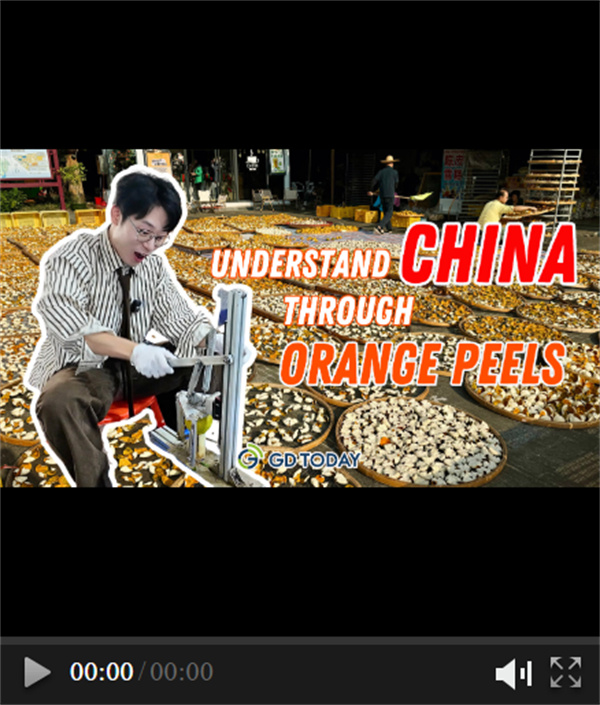
In the heart of Guangdong Province, the city of Jiangmen has turned an unlikely ingredient—orange peels—into a thriving industry that combines health benefits, cultural heritage, and economic success.
In Xinhui District, the art of cultivating tangerines and producing Chenpi (dried tangerine peel) has been perfected over 700 years. The district's orchards now span 143,000 mu (around 9,533 hectares), with nearly 10,000 families actively involved in the business. This ancient craft has evolved into a modern economic driver, generating an output value of 23 billion yuan in 2023.
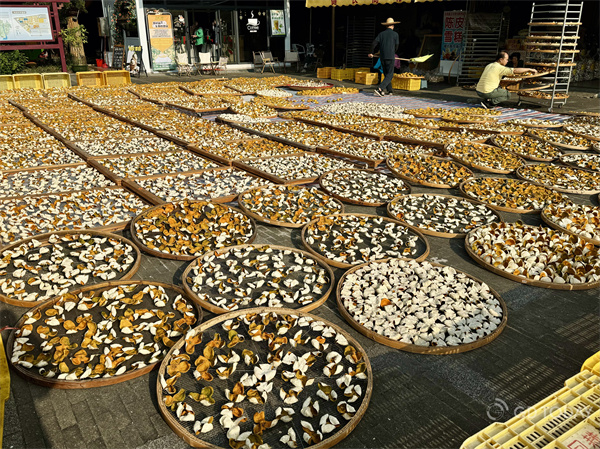
Local vendors place tangerine peels under the sun for drying.
Health benefits: The multifaceted power of Chenpi
While orange peels are discarded in many parts of the world, they hold a special place in Jiangmen's culinary and cultural identity. Chenpi is a staple in Cantonese cuisine, used in teas, soups, desserts, and even traditional Chinese medicine. Known for its health benefits, Chenpi is praised for its anti-inflammatory, liver-protective, and anti-aging properties, with studies suggesting potential roles in cancer prevention.
"The longer these peels are stored, the greater their therapeutic value becomes," said Ye Bolin, a representative of Meijiang Tangerine Orchard in Xinhui. "They are truly a symbol of health and wellness."
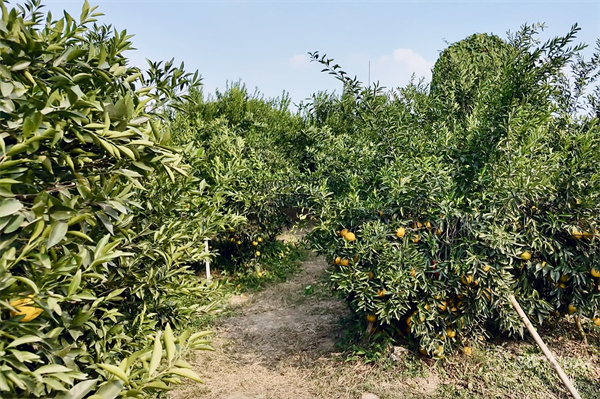
A tangerine orchard in Xinhui District, Jiangmen.
A booming industry
The Chenpi industry has grown far beyond its local roots, producing over 100 varieties of products across six major categories, including medicine, food, tea, and even perfumes. The supply chain is highly sustainable, with every part of the fruit utilized—the flesh is turned into juice, jams or fertilizer, and the peel is carefully processed into Chenpi.
Standardized production methods have helped local manufacturers meet global demands, exporting products to markets in Hong Kong, Macao, Malaysia, Singapore, and the United States. Chenpi Village in Xinhui has even opened a specialty store in the U.S., introducing the product to a wider audience, and making it a sought-after commodity among overseas Chinese communities and beyond.
Chenpi has become a cornerstone of Xinhui's economy. As Ye noted, "Chenpi brings significant income for farmers here. It's not just a product—it's a way of life." The region's dedication to Chenpi production underscores the harmonious blend of tradition, innovation, and sustainability.
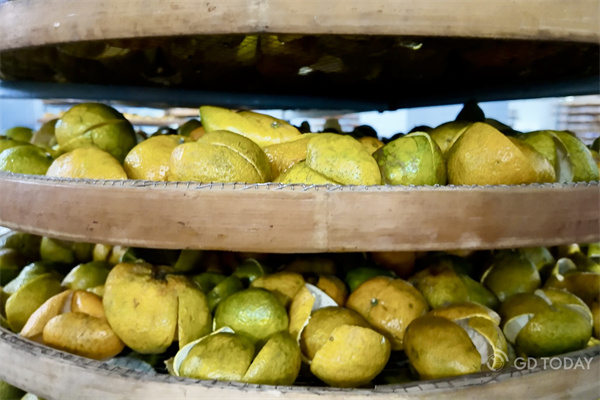
Tangerine peels in a processing workshop ready for drying.
A symbol of modern China
Jiangmen's success story with Chenpi highlights how traditional practices can evolve into global industries. With its deep cultural roots, health benefits, and economic impact, Chenpi stands as a testament to the region's ingenuity and resilience.
As the industry continues to grow, Chenpi is not only enhancing global appreciation for Cantonese cuisine but also offering a unique way to understand China.
Reporter: Li Fangwang
Photo: Li Fangwang
Videographer: Deng Yingheng, Liang Zijian, Li Fangwang
Video Editing: Deng Yingheng
Poster: Li Fangwang
Editor: Hu Nan, James, Shen He